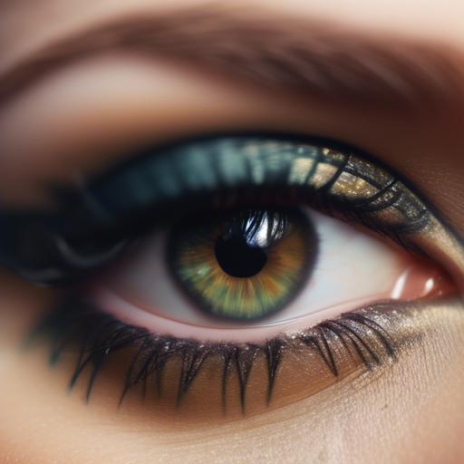
Patchwork Eyeshadow: Your Ultimate Guide To Mastering Mixed-Pattern Eye Magic
Have you ever stared at a single, flat eyeshadow shade and thought, “This needs more story, more dimension, moreme?” What if the secret to unlocking a truly show-stopping, editorial-worthy gaze isn’t found in one pan, but in the fearless art of patchwork eyeshadow? This isn’t just another makeup trend; it’s a vibrant philosophy of self-expression, turning your eyelids into a canvas for bold, textured, and beautifully mismatched masterpieces. Forget blending everything into a seamless gradient—patchwork eyeshadow celebrates the art of the intentional contrast, where geometric shapes, clashing colors, and disparate finishes coexist in stunning, curated chaos. In this comprehensive guide, we’re diving deep into the world of mixed-pattern eye makeup, unraveling its history, mastering the techniques, and discovering how you can wield this powerful tool to create looks that are uniquely, unapologetically yours.
What Exactly Is Patchwork Eyeshadow? Decoding the Trend
At its core, patchwork eyeshadow is an eclectic eye makeup technique where multiple, often contrasting, eyeshadow colors, finishes (matte, shimmer, metallic, glitter), and even textures are applied in distinct, defined sections or “patches” across the eyelid. Unlike traditional gradient or smoky looks that aim for seamless fusion, patchwork embraces hard edges, sharp lines, and deliberate separation. Think of it as the makeup equivalent of a beautifully tailored quilt or an abstract painting—each block of color or texture is a deliberate piece of a larger, cohesive composition. The magic lies in the curated contrast: a matte terracotta square next to a shimmery teardrop, a glitter stripe over a matte base, or a graphic line of metallic against a neutral canvas. This technique allows for unparalleled creativity, transforming your eyes from a simple accent into the undeniable focal point of your entire look.
The rise of patchwork eye looks is a direct rebellion against the “less is more” mentality that dominated for years. It champions maximalism and personal narrative. Your choice of patches can be wildly colorful and playful, moody and monochromatic, or even inspired by art movements like Bauhaus or Abstract Expressionism. It’s a form of non-verbal storytelling. A patch of gold might represent optimism, while a slash of deep purple adds mystery. The technique is incredibly versatile, scalable from a single graphic accent to a full-face abstract masterpiece. Its popularity is fueled by social media platforms like Instagram and TikTok, where makeup artists and enthusiasts share hyper-creative, time-lapse videos that make the technique look accessible and endlessly inspiring. In a sea of neutral glam, patchwork eyeshadow is your ticket to standing out and expressing your inner artist.
A Stitch Through Time: The History and Evolution of Mixed-Pattern Eye Makeup
While the term “patchwork eyeshadow” is a modern social media darling, the concept of adorning the eyes with distinct, patterned blocks of color is ancient. Fast forward to the 1960s and 70s, where the explosion of psychedelic art and pop art directly influenced makeup. Think of the graphic eyeliner shapes of the era, which naturally extended to the lid. The 1980s were arguably the first golden age of bold, patch-like eye color, with its love for intense, blocky blues, purples, and greens applied in sharp, dramatic shapes—a direct nod to the era’s maximalist fashion. The 1990s and early 2000s saw a pivot to grungey, smudged neutrals, pushing bold graphic color to the fringes.
The true modern renaissance of patchwork eyeshadow began on the runways in the late 2010s. Designers like Marc Jacobs and Dior sent models down the catwalk with eyelids featuring sharp, architectural blocks of color, glitter accents, and unconventional placements. This high-fashion endorsement trickled down to YouTube and Instagram, where artists like Pat McGrath (whose “Skin Fetish” looks often feature abstract, patched elements) and Hung Vanngo popularized the technique. The COVID-19 pandemic accelerated its growth; stuck at home, people turned to creative, experimental makeup as a form of play and self-care. What started as an avant-garde runway stunt became a democratized, daily-wearable form of art. Today, patchwork eyeshadow exists on a spectrum—from subtle, single-patch accents perfect for the office to full-face, multi-colored statements for a festival or photoshoot—proving its enduring power as a tool for individuality.
Your Step-by-Step Blueprint: How to Create a Flawless Patchwork Eyeshadow Look
Mastering patchwork eyeshadow might seem daunting, but it’s a skill built on preparation, planning, and precision. The key is to shift your mindset from “blending” to “constructing.” Here’s your actionable guide.
Step 1: The Non-Negotiable Foundation – Prep and Prime
A successful patchwork look is built on a stable, crease-free canvas. Start with a hydrating eye cream to prevent patchiness. Next, apply a dedicated eyeshadow primer (like Urban Decay Primer Potion or Smashbox 24-Hour Shadow Primer) all over the lid and into the crease. This step is crucial for color payoff, longevity, and preventing fading or creasing in your distinct patches. For extra insurance, especially with glitter or metallic shadows, set the primer with a translucent powder or a skin-toned matte eyeshadow using a fluffy blending brush. This creates a uniform, matte base that makes colors pop and prevents unwanted mixing at the edges.
Step 2: The Artist’s Strategy – Color Palette and Pattern Planning
This is the creative heart of the process. Don’t just grab random colors. Start by choosing a cohesive theme:
- Monochromatic Magic: Use varying shades and finishes of one color (e.g., matte terracotta, satin coral, glitter copper).
- Complementary Clash: Pair colors opposite on the color wheel (e.g., blue and orange, purple and yellow) for maximum vibrancy.
- Neutral + Pop: Build on a base of taupes, browns, or creams, then add one or two “wow” patches of bright color or glitter.
- Texture Play: Focus on mixing finishes—matte, satin, shimmer, glitter—within one or two color families.
Next, sketch your design mentally or on paper. Where will your patches live? Common placements include:
- A geometric shape (triangle, square, circle) on the center of the lid.
- A “cut crease” where a sharp line separates a colorful lower lid from a neutral upper lid.
- Asymmetric patches—one large block on the outer V, a smaller accent on the inner corner.
- Graphic lines or stripes across the lid or under the lower lash line.
Pro Tip: Keep your design simple at first. Start with 2-3 patches max before attempting a complex multi-patch masterpiece.
Step 3: The Precision Toolkit – Application Techniques for Sharp, Clean Edges
This is where patchwork eyeshadow diverges completely from traditional blending. You need tools for isolation, not diffusion.
- Flat Synthetic Brushes: Use small, dense, flat brushes (like a detail brush or pencil brush) for packing on color precisely within your planned shapes. Tap off excess product to avoid fallout.
- Tape for Perfection: For razor-sharp, straight lines (like a graphic wing or cut crease), use medical-grade tape or makeup tape. Place it along your desired edge, apply the shadow, then carefully remove the tape for a crisp, professional line.
- Concealer as Your Eraser: A small, precise brush with a matte concealer (like Maybelline Fit Me or NARS Radiant Creamy Concealer) is your best friend. After applying a patch, use the concealer to “cut” its edges, creating an ultra-sharp border against the skin or another color. This trick is a game-changer.
- Fingers for Glitter/Metallic: For foiled or glitter shadows, use your ring finger (it’s gentler and has more warmth) to press the product onto the lid in your designated patch area. This ensures maximum adhesion and payoff.
Apply your patches from light to dark and from large to small. Start with your largest background patch, then layer smaller, more detailed patches on top. Work slowly and deliberately.
Step 4: The Illusion of Cohesion – Strategic Blending (Yes, There is Blending!)
While the goal is distinct patches, you still need to soften harsh edges where patches meet to avoid a messy, unblended look. The rule: blend only at the internal edges of your design, never at the external perimeter.
- Use a clean, fluffy blending brush with very little product.
- Gently sweep in small, circular motions only where two colors meet inside your design. For example, if you have a blue square next to a yellow triangle, softly soften the line where they touch.
- Never blend the outer edge of your entire eye look into the brow bone or crease unless that’s part of your planned design. The external edges should remain sharp and intentional.
- If you make a mistake, use your concealer brush and matte concealer to clean up the border immediately.
Step 5: The Grand Finale – Finishing Touches and Locking It In
- Lower Lash Line: Continue your patchwork theme here! Use a smaller brush to apply coordinating colors or a single accent shade in a defined segment. A tightline with a colored kohl pencil can also tie the look together.
- Highlight: Apply a bright, shimmery highlight to the inner corner and brow bone. This creates a clean, bright counterpoint to the busy lid and makes the patchwork shapes pop even more.
- Lashes:Curl lashes and apply mascara. For maximum impact, consider false lashes that are wispy or fluffy rather than overly dramatic, so they don’t compete with your eye art. A individual lash here and there can be a fun, textured accent.
- Set the Masterpiece: Finish with a spritz of setting spray (like Urban Decay All Nighter or MAC Prep + Prime Fix+) held at arm’s length. This melds any microscopic powder together and ensures your patchwork eyeshadow lasts for hours without fading or creasing.
The Arsenal: Top Products and Tools for Patchwork Perfection
Your toolkit can make or break your mixed-pattern eyeshadow execution. Here’s what to look for:
Eyeshadows: Prioritize high-pigmentation, blendable formulas that also have good adhesion.
- Matte Powerhouses:ColourPop Pressed Powders, Makeup Geek Matte Shadows, MAC Matte Eyeshadows. They provide solid, opaque blocks of color perfect for sharp patches.
- Shimmer & Metallics:Stila Magnificent Metals Foiling Finish, ** Natasha Denona Chroma Abyss**, Huda Beauty Mercury Retrograde Palette shadows. These offer intense, reflective payoff.
- Glitters & Glues: For true glitter patches, you need a glitter adhesive (like NYX Glitter Primer or Fenty Beauty Glitter Bomb). Loose glitters (from Brands like Lit Cosmetics or Disco Glitter) or glitter eyeshadows (like Urban Decay Heavy Metal) work over the adhesive.
- Palette Picks for Patchwork: Look for palettes with a variety of finishes and strong color families. The Huda Beauty New Nude Palette, Anastasia Beverly Hills Modern Renaissance, and Juvia’s Place The Nubian are fantastic for their range of mattes and shimmers.
Essential Tools:
- Detail Brushes: A set of small, flat synthetic brushes (e.g., Sigma E35 or E45) for precise packing.
- Fluffy Blending Brushes: A clean, fluffy brush (like MAC 217) for the subtle internal blending.
- Precision Brushes: A tiny angled brush (for liner or tiny patches) and a pencil brush for detail work.
- Tape & Concealer:Scotch Sensitive Skin Tape or 3M Micropore Tape for lines. A matte concealer and a small, firm brush for cutting edges.
- Makeup Sponge: For pressing glitter or metallic shadows onto the lid without fallout.
From Runway to Your Vanity: Current Trends and Inspirations in Patchwork Eyeshadow
The beauty of this technique is its constant evolution. Here are the hottest patchwork eyeshadow trends dominating feeds right now:
- The Single-Statement Patch: The most wearable entry point. Instead of covering the whole lid, create one bold, graphic shape—a sharp triangle, a half-moon, a bold stripe—on a neutral base. It’s a pop of art that’s office-appropriate and effortlessly cool.
- Double-Tone Cut Crease: A classic with a patchwork twist. Instead of a single color in the cut crease, use two distinct, adjacent colors in sharp, separated blocks. Imagine a matte burgundy cut crease with a shimmering gold patch right next to it on the mobile lid.
- Glitter Grids: Applying small, square or rectangular patches of glitter in a grid-like pattern across the lid. This is incredibly popular for festival and party looks, offering a disco-ball-meets-abstract-art effect.
- Negative Space Patchwork: This advanced technique uses the skin’s natural tone as one of the “patches.” You cut out shapes (like a crescent or star) from a solid color block, leaving bare skin as part of the design. It’s stunning and architectural.
- Lower Lash Focus: Moving the patchwork action entirely to the lower lash line. Think of a segmented lower lash line with different colors or textures in each segment—a matte brown on the outer third, a glitter in the middle, a bright pop on the inner corner. This is a subtler way to experiment.
Celebrity & Artist Inspiration: Follow @hungvanngo, @patmcgrathreal, and @wayne_goss on Instagram for masterclasses. Look to artists like Arianna Rebolini (known for her colorful, graphic looks) and Mari Maria for vibrant, playful interpretations. On the celebrity side, Lizzo, Janelle Monáe, and Harry Styles are known for embracing bold, artistic eye makeup that often incorporates patchwork-like elements.
Pitfalls to Avoid: Common Patchwork Eyeshadow Mistakes (And How to Fix Them)
Even the most creative artists hit snags. Here’s how to navigate the most common patchwork eyeshadow hurdles:
- Mistake: The “Messy Merge.” Your patches are blurring into each other, losing their definition.
- Fix: Use less product on your blending brush. Blend only where patches meet internally, using light pressure. If edges get messy, clean them up immediately with a concealer brush and matte concealer. Working on a well-primed, powdered base is non-negotiable.
- Mistake: Clashing Chaos. The colors/textures fight each other, creating an unflattering, muddy look.
- Fix:Plan your palette first. Stick to a color theory rule (monochromatic, complementary, or analogous) or a texture theme (all mattes, all metallics). Have a neutral base (taupe, cream, soft brown) to anchor the look. One bold patch is often more powerful than three competing ones.
- Mistake: Fallout Fiasco. Glitter and loose pigments raining down onto your cheeks.
- Fix:Do your eyes before foundation. Apply a thick layer of moisturizer or a sticky base (like Fenty Beauty Pro Filt’r Instant Retouch Primer) under the eye area and on the lower lash line to catch fallout. Press glitter shadows with a finger or sponge, don’t sweep. Use a lint-free wipe to clean up fallout after you’ve finished the rest of your face.
- Mistake: Unbalanced Design. The patches are all over the place, with no focal point.
- Fix:Have a hierarchy. Decide on your “hero” patch (the largest, brightest, or most textured). Build your other patches to support and frame it, not compete. Think about visual weight—a large matte patch has more weight than a small glitter accent.
- Mistake: Forgetting the Rest of the Face. The eye look is stunning, but the rest of your makeup clashes or gets lost.
- Fix:Keep the rest of your makeup simple. A fresh, glowing base with minimal foundation coverage, a soft blush, and a neutral or nude lip (or even a clear gloss) lets your patchwork eyeshadow be the star. If you want a bold lip, ensure your eye patches are more neutral in tone.
Conclusion: Your Eyelid, Your Canvas
Patchwork eyeshadow is so much more than a fleeting makeup fad. It is a democratic art form, a rebellion against one-size-fits-all beauty standards, and a direct line to your creative spirit. It asks you to be both a strategist and a dreamer—to plan your color stories with intention, then wield your brushes with fearless abandon. The journey from a primed lid to a finished, patchwork masterpiece is a practice in patience, precision, and personal expression. There are no rigid rules, only guiding principles: prepare your canvas, curate your elements, construct with sharp tools, and edit with a critical (but kind) eye.
So, the next time you face your eyeshadow palette, don’t just reach for a single shade. Ask yourself: What story do my eyes want to tell today? Is it a story of serene monochromes, a clash of joyful opposites, or a glittering constellation? Embrace the patchwork. Start small with a single graphic accent, then gradually build your confidence. Experiment, fail, laugh, and create again. In the world of patchwork eyeshadow, every “mistake” is just a new texture, a new shape, a new chapter in your ever-evolving beauty narrative. Your eyelids are waiting to be your most dynamic, expressive canvas yet. Now, go stitch something beautiful.