Cyberpunk Makeup: How To Master The Futuristic, Neon-Lit Aesthetic
What if your face could be a canvas for a dystopian tomorrow? What if your makeup wasn't just about enhancing features, but about telling a story of technology, rebellion, and neon-soaked cityscapes? Welcome to the electrifying world of cyberpunk makeup, a vibrant beauty movement that has exploded from the fringes of cosplay and editorial shoots into mainstream fashion and everyday self-expression. It’s more than just a look; it’s an attitude, a fusion of high-tech and low-life, rendered in bold pigments, sharp lines, and unexpected textures. This comprehensive guide will dissect the cyberpunk aesthetic, providing you with the history, core techniques, product recommendations, and actionable inspiration to craft your own futuristic identity.
The Genesis of a Dystopian Dream: What is Cyberpunk Makeup?
To master the look, we must first understand its roots. Cyberpunk makeup is a visual style directly inspired by the cyberpunk genre of science fiction. This genre, which blossomed in the 1980s with seminal works like William Gibson's Neuromancer and films like Blade Runner, depicts a future where advanced technology, cybernetic enhancements, and artificial intelligence coexist with societal collapse, urban decay, and corporate dominance. The aesthetic is a stark, gritty contrast: sleek, luminous technology against a backdrop of rain-slicked streets, towering megastructures, and a population that is both wired and marginalized.
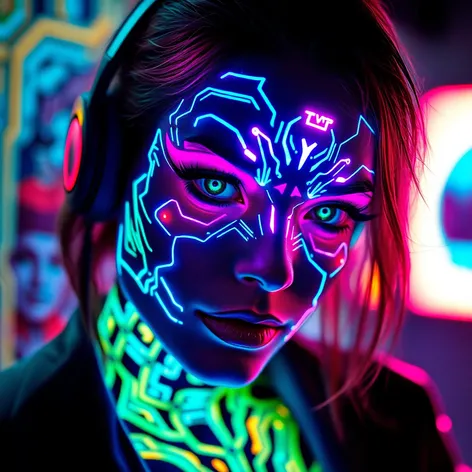
This dichotomy is the heart of the makeup. It’s not a clean, utopian sci-fi look (think Star Trek). It’s "high-tech, low-life." The makeup mimics the visual language of that world: the glow of holographic interfaces, the stark lines of circuitry, the artificiality of synthetic skin, and the chaotic energy of a data-saturated environment. It often features a color palette dominated by electric blues, vivid magentas, neon greens, and acidic yellows, set against a base that can range from pallid and washed-out to dramatically contoured. The goal is to create a sense of being augmented—part human, part machine, existing on the edge of a digital abyss.
The Cultural Surge: From Niche to Mainstream
While the aesthetic has been simmering in subcultures for decades, the last five years have seen an unprecedented surge in its popularity. According to Google Trends, searches for "cyberpunk makeup" have grown by over 67% since 2019, with significant spikes correlating with the release of the video game Cyberpunk 2077 and the resurgence of 90s/Y2K fashion. Social media platforms like TikTok, Instagram, and YouTube are flooded with tutorials, transformations, and looks tagged #cyberpunkmakeup, accumulating billions of views. This growth is fueled by several factors:
- The Nostalgia for Retro-Futurism: There's a potent nostalgia for the "future" as imagined in the 80s and 90s—a future that felt both impossibly advanced and strangely analog.
- The Rise of "Dopamine Dressing" and Maximalism: After years of minimalist "no-makeup" makeup, there's a strong cultural swing towards bold, joyful, and expressive aesthetics. Cyberpunk offers a structured, artistic way to be maximalist.
- The Blurring of Gender Norms: The style is inherently androgynous and non-binary, appealing to a generation that rejects traditional beauty standards. It’s about character, not conventional femininity or masculinity.
- Gaming and Pop Culture Influence: Characters from games (Cyberpunk 2077, Deus Ex), anime (Ghost in the Shell), and films (The Matrix, Alita: Battle Angel) provide endless visual references.
Deconstructing the Aesthetic: Core Elements of Cyberpunk Makeup
Now, let's break down the visual vocabulary. A successful cyberpunk look is built on a few key pillars that you can mix, match, and emphasize based on your personal interpretation.
The Foundation: Skin as a Canvas
The base is rarely "natural." It serves the narrative.
- The Pallid/Chrome Base: A very pale, almost greyish foundation or white face paint creates a sickly, "indoors" or "augmented" look, reminiscent of someone who spends their life under artificial light. Think of the characters in Blade Runner 2049.
- The Contoured/Structured Base: Sharp, dramatic contouring is essential. This isn't soft blending; it's about creating harsh shadows and geometric planes on the face to mimic the angles of a mask, a helmet, or cybernetic implants. Nose contour often extends dramatically down the sides of the nose.
- The "Glitch" or "Data-Moshing" Base: Some artists use stippling, dotting, or abstract lines in contrasting colors directly on the skin around the eyes, temples, or jawline to simulate digital corruption or data streams.
The Eyes: Windows to the Digital Soul
This is the epicenter of the look.
- Graphic Liner: Forget a simple cat-eye. Think sharp, architectural lines extending from the outer corner towards the temple, lower lash lines traced in stark white or neon, and intricate geometric shapes drawn on the lid or brow bone. Negative space eyeliner (leaving gaps in the line) is a popular technique.
- Bold Shadow & Chrome: Vibrant, matte shadows in neon hues are classic. For a more advanced, "high-tech" feel, chromatic or duochrome shadows are key. These are pigments that shift color depending on the light—blue to purple, gold to green—mimicking the iridescence of holographic film or oil slicks.
- Lower Lash Drama: The lower lash line is often heavily emphasized. Tightlining with white or bright color, applying clustered false lashes (often in unnatural, spiky styles), or drawing a thick line of shadow/liner underneath creates a wide-eyed, intense, sometimes unsettling stare.
- "Tech" Accents: Tiny dots, dashes, or circuit-board-like patterns drawn with a fine brush and white or metallic eyeliner on the skin near the eyes or across the nose bridge.
The Graphic Elements: Lines, Shapes, and Symbols
This is where personal artistry shines. Using liquid liners, face paint markers, or even thin tape for sharp edges, you create non-human markings.
- Circuit Board Patterns: Mimicking the traces on a microchip.
- HUD (Heads-Up Display) Elements: Simulating targeting reticles, data readouts, or framing lines around one eye.
- Biomechanical Imagery: Suggesting seams, ports, or mechanical parts under the skin.
- Abstract Geometry: Sharp triangles, parallelograms, and shattered lines.
Color & Light: The Neon Pulse
- Neon is Non-Negotiable: The palette is electric. Electric blue, hot pink, laser green, and vivid orange are staples. They are used as accents—a slash of shadow, a graphic liner, a lip color—to pop against a darker or more neutral base.
- Metallics & Chromes: Silver, gunmetal, and holographic silver/gold represent cold, hard technology. They are perfect for graphic elements or all-over lid looks.
- The "Blacklight" Effect: Some cyberpunk makeup incorporates UV-reactive pigments. Under blacklight, hidden designs or base colors glow with an otherworldly intensity, perfect for club looks or photoshoots.
Lips: The Final Statement
Lips can be a point of stark contrast or integrated into the graphic theme.
- The Ombre/Glossy "Data" Lip: A matte, dark base (black, deep purple, navy) with a lighter, glossy, or metallic color concentrated in the center, creating a wet, data-stream effect.
- Graphic Lips: Using liner to create an exaggerated cupid's bow, a sharp pointed corner, or even drawing a line or symbol across the lip.
- The Neutral "Filler" Lip: Sometimes, the lips are left in a muted, nude, or grey tone to let the eyes and graphic elements take full center stage.
From Concept to Creation: A Step-by-Step Practical Guide
Ready to try it? Here’s a foundational, adaptable routine.
Step 1: Prep & Prime. Start with a clean, moisturized face. Use a ** mattifying primer** if you want a sleek, synthetic look, or a glowing primer for a more holographic base. Set with a translucent powder, focusing on the T-zone.
Step 2: Build the Base. For a classic look, apply a foundation 1-2 shades lighter than your skin tone for the pallid effect. Use a white face paint stick for maximum impact. Contour aggressively with a cool-toned matte bronzer or grey-based contour powder. Focus on hollows of cheeks, sides of nose, and jawline for sharp definition.
Step 3: The Graphic Blueprint.This is the most important step. With a fine-tipped liquid liner (like a tattoo liner or eyeliner pen), sketch your graphic elements lightly with a pencil first if you're unsure. Draw your main lines—extended cat-eye, lower lash line, geometric shapes on the lid or brow bone. Use scotch tape as a stencil for perfectly sharp edges. Take your time. Less can be more; one strong graphic element is often more powerful than many messy ones.
Step 4: Color & Dimension. Fill in your graphic shapes with your chosen neon or metallic eyeshadows. Use a small, flat brush for precision. For a blended transition, use a fluffy brush with a matte transition shade in a complementary or neutral color. Apply your bold shadow to the lid. For chrome effects, pat the pigment on with your finger or a synthetic brush for maximum payoff.
Step 5: Define & Amplify. Tightline upper and lower lashes with a black or colored pencil. Apply mascara, or opt for cluster lashes applied in a spiky, uneven pattern. Highlight the inner corner and brow bone with a silver or holographic powder to make the eyes "glow."
Step 6: Lips & Finishing Touches. Outline and fill lips with a liner. For a classic cyberpunk lip, try a black or deep plum matte liquid lipstick, then dab a metallic gloss or a lighter shade in the center. For a graphic touch, draw a small dot or line at the corner of the mouth with liquid liner. Finally, set everything with a setting spray, preferably one with a dewy or satin finish to avoid a cakey, dry look. A light dusting of clear glitter or holographic highlighter on the high points can add a final "digital" shimmer.
Product Pantheon: What to Buy to Build Your Kit
You don't need a fortune, but specific products make all the difference.
- For Graphic Liner: NYX Professional Makeup Epic Ink Liner, KVD Vegan Beauty Tattoo Liner, or any fine-tip art marker like those from Sharpie (tested for skin safety) or Sakura.
- For Neon & Chrome Shadows: Look for palettes specifically marketed as "neon," "chroma," or "holographic." Brands like ColourPop (their Super Shock Shadows in chrome finishes), Huda Beauty (the Neon palette), Morphe (various artist palettes), and Urban Decay (Naked Cyber palette) offer great options. Single pigment eyeshadows from Makeup Geek or Sugarpill are also excellent.
- For the Base: A very pale foundation like L'Oréal Paris True Match Lumi or e.l.f. Cosmetics Poreless Putty Primer in a light shade. For white face paint, Mehron or Snazaroo face paints are professional-grade and safe.
- For Lips:Lime Crime Velvetines (for matte), KVD Vegan Beauty Alchemist palette (for holographic glosses), or any metallic liquid lipstick.
- Essential Tools: A set of detail brushes (size 00, 0, 1), a flat synthetic brush for packing on pigment, scotch tape, and Q-tips dipped in micellar water for cleanup.
Finding Your Cyberpunk Inspiration: Archetypes to Emulate
Your cyberpunk persona can take many forms. Here are four classic archetypes to guide your creation:
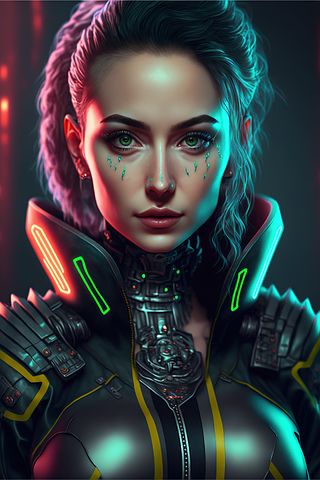
- The Street Samurai/Runner: Think Cyberpunk 2077's female V or Alita. Edgy, practical, with a touch of rebellion. Look: Smoky, dark eye with a single bold neon accent (e.g., electric blue lower lash line), sharp contour, dark nude or black lip. Hair is often slicked back or in a severe ponytail.
- The Corporate Augment (The Suit): Sleek, powerful, terrifyingly perfect. Inspired by Blade Runner's replicants or corporate agents. Look: Flawless, pale base with sharp, clean contour. Metallic silver or chrome on the lids, perfectly sculpted brows, a nude or pale pink lip. The graphics are minimal and precise—a single thin silver line, a tiny data port drawn on the temple.
- The Netrunner/Data Witch: The hacker, the information broker. Their makeup looks like it's from the net. Look: More abstract, glitchy graphics. Blue or purple "data stream" lines radiating from the eye. Duochrome shadows that shift. Possibly UV-reactive elements. Hair is often in braids or tech-infused styles.
- The Post-Apocalyptic Scavenger: Gritty, lived-in, made from found parts. Think Mad Max meets cyberpunk. Look: Base is more "dirtied" with browns and rust colors. Graphics are rougher, as if drawn with charcoal or mud. Metallic elements are tarnished. Lips might be chapped with a dark stain. The look is less about neon and more about texture and survival.
Beyond the Face: Completing the Cyberpunk Character
Makeup is the star, but the full aesthetic is a synergy of elements.
- Hair: Slicked back, shaved sides with neon streaks, space buns, wigs in unnatural colors (silver, blue, pink), or hair with fiber optics woven in.
- Body Art: Temporary tattoos that look like circuitry, scarification, or biomechanical tattoos. Body paint for larger graphic elements on the neck, chest, or arms.
- Fashion & Accessories: This is where the "punk" meets the "cyber." Think PVC, vinyl, leather, techwear (Cargo pants with straps, tactical vests), chunky platform boots, goggles (worn on the forehead or over eyes), LED accessories, face masks, and exaggerated jewelry made of metal, resin, or 3D-printed materials.
- Nails: Long, sharp, and painted in metallic, neon, or holographic polish. Nail art with circuit patterns is a perfect detail.
Troubleshooting & Common Questions
Q: Is cyberpunk makeup only for special occasions or Halloween?
A: Absolutely not. While it's perfect for those events, many people incorporate subtle cyberpunk elements into their daily wear. This could be a graphic eyeliner wing, a chrome eyeshadow, or a neon lip. Start small and build confidence.
Q: I have mature skin/am a beginner. Can I still do this?
A: Yes! The key is adaptation. For mature skin, focus on skincare prep for a smooth canvas. Use a lighter hand with heavy contour. Opt for softer graphic lines or focus on one bold element like a chrome lid. The principles of shape and color still apply. Beginners should master one element at a time—practice your graphic liner on your hand first, or master a perfect cut crease with a neon shadow before adding multiple components.
Q: How do I make my cyberpunk makeup last all day/night?
A: Prime, set, and spray. Use a long-wearing primer. Set your base and eye primer with powder. Apply your graphic elements last. Use a long-wear, waterproof liner. Finish with a strong-hold setting spray, like those from Urban Decay or NYX. For extreme longevity (e.g., a convention), consider a makeup sealer like Mehron's Skin Prep or Ben Nye Final Seal.
Q: What's the difference between cyberpunk and futuristic/space makeup?
A: Great question! Futuristic/space makeup (think Star Wars or The Jetsons) is often cleaner, more polished, and uses a palette of silver, white, and blue to evoke a sterile, advanced, and often optimistic future. Cyberpunk makeup is grittier, more chaotic, and rooted in decay. It uses neon against dark or ashy bases, incorporates graphic, "hand-drawn" lines, and feels more like street fashion than space couture.
The Ethical Glow: Sustainability and Inclusivity in the Cyberpunk Space
As the trend grows, so does the conversation around its ethics. The fast-fashion aspect of buying cheap, single-use costumes is a concern. The solution is to build a versatile kit with multi-use products (a chrome shadow can be an eyeliner, highlight, or body glitter). Many artists are also using vegan, cruelty-free, and sustainable brands. Furthermore, the cyberpunk aesthetic is inherently inclusive. It transcends age, gender, skin tone, and ability. The goal is character creation, not conformity. Artists are constantly adapting the look for all skin tones, using deeper contour shades and ensuring neon colors pop on melanated skin (often by using a white base under the pigment). It’s a style built on individuality and rebellion, making its inclusive nature not just a trend, but a core tenet.
Conclusion: Your Face, Your Future
Cyberpunk makeup is a powerful form of visual storytelling. It’s a rejection of passive beauty and an embrace of active, intentional design. It asks the viewer to look closer, to question what they're seeing, and to acknowledge the complex, wired world we already inhabit. You don't need a cybernetic implant to participate. You just need a brush, a vision, and the courage to draw a line where one doesn't belong.
Start with one element—a sharp, neon wing, a chrome lid, a circuit drawn on your collarbone. Experiment. Fail. Try again. The beauty of this aesthetic is that there are no true rules, only references and inspiration. It’s about capturing a feeling—the hum of a server farm, the glow of a distant neon sign in the rain, the thrill of hacking the system. So, look to the dystopian futures of film and game, but ultimately, create your own. Your face is your interface to the world. What will you program it to say? The future is not fixed; it's glitchy, neon, and waiting for you to paint it.